Why Have Smartphone Makers Never Given Up on Secondary Displays?

Smartphone makers have experimented with secondary displays for more than a decade, yet they have never become a standard feature. From the E Ink screen of YotaPhone to the rear displays of Meizu, Nubia, vivo, and Xiaomi, the concept has repeatedly appeared in different forms and then disappeared from the mainstream.
So why do manufacturers keep coming back to it? The answer is that a second display is rarely essential, but it can provide a very different experience in certain situations. Its history is therefore less about adding more screen space and more about finding a useful role for a second surface.
What Is a Secondary Display?
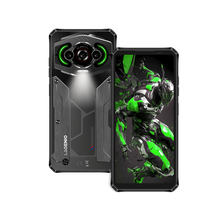
A secondary display is an additional screen built into a smartphone outside its primary display. It can be located above the main screen, on the rear panel, or beside the camera system, and it can range from a small information panel to a full-size interactive display.
Its purpose varies from one device to another. Some secondary displays show the time, notifications, battery status, or music controls. Others support apps and general interaction, while rear displays can also work as viewfinders for the phone's main camera.
This distinction is important because the value of a secondary display does not necessarily come from having more screen space. Its real value depends on whether it can make a specific task easier or provide an experience that the main screen cannot offer as conveniently.
From Flip Phones to the First Dual-Screen Smartphones
The basic idea of a secondary display existed long before modern smartphones. Flip phones commonly had small external screens that showed the time, incoming calls, battery level, and other basic information while the phone was closed. The display was not designed to replace the main screen; it simply allowed users to access essential information without opening the phone.
The concept became much more ambitious with the YotaPhone, introduced in 2013. Instead of adding another conventional LCD or OLED panel, YotaPhone placed an E Ink display on the back of the device. The front LCD handled normal smartphone functions, while the rear screen was designed for reading, notifications, and other low-power tasks.
YotaPhone's approach was significant because it gave the two displays different purposes rather than simply duplicating the same interface. It suggested that the best use of a second screen might be to use a different display technology for a different type of activity.
LG and Meizu Explored Different Roles for the Second Screen
LG took a completely different approach with the LG V10 and later the LG V20. Instead of placing the secondary display on the back, LG positioned a narrow screen above the main display. It could show notifications, shortcuts, music controls, contacts, and other frequently accessed information.
The design showed that a secondary display did not have to be large to be useful. Its purpose was to reduce the need to interrupt the main screen for small, repetitive tasks.
In 2017, the Meizu PRO 7 took the secondary display to the rear of the phone. Its small AMOLED panel could display information and, more importantly, provide a preview when taking selfies with the rear cameras.
This introduced one of the most practical applications for rear displays. Smartphone rear cameras generally have more capable hardware than front-facing cameras, but using them for selfies normally means losing the ability to see the framing. A rear display solves that problem by allowing the user to use the better camera while still seeing the composition.
When the Rear Display Became a Second Phone Screen
In 2018, manufacturers began experimenting with much larger rear displays. The vivo NEX Dual Display Edition and Nubia X both placed large AMOLED screens on the back of the phone.
Instead of limiting the rear display to notifications or camera previews, these devices allowed it to support much broader interaction. Nubia X, for example, used the rear screen together with the rear cameras to create a full-screen design without relying on a traditional front-facing camera.
The Nubia Z20, released the following year, continued this concept with a large rear display that could function as a second interactive screen.
These phones demonstrated that a smartphone could technically provide two complete displays. However, they also highlighted one of the biggest challenges of the concept: if the two screens can perform many of the same tasks, users may have little reason to use both.
A second screen becomes harder to justify when it simply duplicates the first one.
Xiaomi Mi 11 Ultra Returned to a Smaller, More Specialized Display
The Xiaomi Mi 11 Ultra, released in 2021, took the idea in a different direction. Rather than adding another large display, Xiaomi placed a small AMOLED screen next to the rear camera module.
The screen could show the time, battery information, notifications, and other content, but its most interesting application was again photography. It could act as a preview when users took selfies with the rear cameras.
This approach was more focused than the large dual-screen designs of Nubia and vivo. Instead of trying to turn the rear of the phone into a second smartphone, it used a small display to solve a few specific problems.
That distinction is important to the history of secondary displays. Over time, manufacturers have increasingly explored not just how much a second display can do, but what it should do.
Why Haven't Secondary Displays Become Standard?
The biggest obstacle is that the main smartphone display has become extremely capable. Many of the basic functions once proposed for secondary displays—checking the time, viewing notifications, controlling music, or checking battery status—can already be handled through the lock screen, widgets, Always-On Display, and other software features.
There is also a hardware cost. A physical secondary display requires additional components, structural space, display drivers, software support, and power management. In a smartphone where internal space is already tightly constrained by the battery, cameras, cooling system, and other components, every additional part has to justify its presence.
More importantly, the benefits of a secondary display are highly dependent on the user's needs. A content creator who frequently takes selfies may find a rear viewfinder extremely useful, while another user may rarely have a reason to look at the back of the phone.
This is why secondary displays have struggled to become a universal upgrade in the same way as OLED panels, higher refresh rates, or improved camera systems. Those technologies affect a much broader range of everyday smartphone use, while the benefits of a second display tend to be more specific.
So Why Do Smartphone Makers Keep Coming Back to It?
The answer is that a secondary display can solve problems that cannot be solved simply by making the main screen better.
Take photography as an example. Increasing the resolution or refresh rate of the front display does not solve the problem of using a powerful rear camera for selfies. A second display on the back does. It changes where the user can see the camera preview rather than simply improving the existing screen.
The same principle can apply to other scenarios. A rear display can provide quick information when the phone is being used from the back, offer additional controls while shooting photos or videos, display personalized content, or provide dedicated information for gaming and other applications.
This explains why the concept keeps returning even after previous attempts have disappeared. Manufacturers are not necessarily trying to create a phone with two identical screens. They are looking for situations where a second display can offer a different kind of interaction.
The Evolution of the Secondary Display
Looking at the major examples, the development of secondary displays can be divided into several stages.
The first stage was information display, represented by the external screens of flip phones. The second stage introduced different display technologies and dedicated functions, as seen in YotaPhone and LG's V-series. The third stage moved the display to the rear and connected it with photography, as demonstrated by Meizu PRO 7 and later Xiaomi's Mi 11 Ultra.
The next stage was the idea of a complete second interface, explored by devices such as Nubia X and vivo NEX Dual Display Edition. These phones pushed the concept further, but their complexity also demonstrated why a second full-size screen can be difficult to justify.
More recent approaches have tended to be more focused: rather than making the second display another version of the main screen, manufacturers can give it a specific job.
That may ultimately be the most practical direction for the technology.
What Could Secondary Displays Look Like in the Future?
Secondary displays are unlikely to become a universal requirement for smartphones simply because not every user needs one. But that does not mean the concept is finished.
As smartphone photography, content creation, gaming, AI features, and personalized interfaces continue to develop, manufacturers may find new situations where an additional display provides a useful shortcut or a different way to interact with the device.
The history of secondary displays shows that the technology itself has never been the difficult part. Manufacturers have already demonstrated that phones can support two displays in many different forms.
The harder question is finding a reason for users to actually need the second one.
That is why the future of secondary displays may not be about making smartphones more screens, but making the second screen more purposeful.