Wide-Angle Camera Explained: Focal Length, FOV & More

Wide-angle cameras are now everywhere, from smartphones to action cameras. Most people know that they capture a wider view, but the technology behind that familiar 0.5x or ultra-wide icon is more interesting than it first appears. To understand why wide-angle images look the way they do, it helps to look beyond FOV and start with focal length, sensor size, perspective, and computational photography.
Focal Length: The Starting Point of a Wide-Angle Camera
When people compare smartphone cameras, they often talk about 0.5x, 1x, or 3x. These numbers are convenient, but they don't actually describe the lens itself. A more meaningful specification is focal length.
In simple terms, focal length describes the optical distance between the lens system and the point where light is focused. A shorter focal length generally produces a wider field of view, while a longer focal length produces a narrower one.
This is why a 14mm lens is considered much wider than a 50mm lens in conventional full-frame photography. The 14mm lens can encompass a much larger portion of the scene, while the 50mm lens produces a more concentrated perspective.
However, there is an important detail: field of view depends on both focal length and sensor size. This is why camera specifications often use "35mm equivalent focal length" when comparing different devices. A 12mm lens on one sensor does not necessarily produce exactly the same perspective as a 12mm lens on another.
So when you see a specification such as 152.6° FOV, it is describing the result—the angular field that the camera can capture—rather than simply telling you how the lens is constructed.
Why Does Wide Angle Change the Look of an Image?
One of the most misunderstood aspects of wide-angle photography is perspective.
A wide-angle lens itself does not magically make nearby objects larger and distant objects smaller. What usually creates that dramatic effect is the way photographers use wide lenses: they can move the camera much closer to the subject while still keeping a large amount of the surrounding environment in the frame.
Imagine mounting a camera on a bicycle. The handlebars may be only a short distance from the lens, while the road ahead extends far into the distance. With a wide field of view, the difference between these distances becomes visually prominent. The foreground appears large, while the background seems to stretch away rapidly.
This is one reason action-camera footage can feel so immersive. When the camera is mounted close to the rider, skier, hiker, or vehicle, the combination of a wide perspective and strong foreground movement makes changes in distance more noticeable.
The same principle explains why an ultra-wide camera can be less flattering for close-up portraits. Move the camera very close to a face, and features closer to the lens can appear disproportionately large compared with features farther away.
In other words, wide-angle photography is not simply about fitting more into the frame. It changes the relationship between the subject, the foreground, and the surrounding space.
From Fisheye Lenses to Computational Photography
Very wide-angle photography is not a new idea. Long before smartphones existed, photographers were experimenting with specialized lenses capable of capturing extremely large fields of view.
One important milestone was the fisheye lens, which can achieve an exceptionally wide field of view by accepting significant optical distortion. Straight lines near the edges can curve dramatically, producing the distinctive fisheye appearance.
Modern ultra-wide cameras take a different approach. Instead of simply accepting this distortion, optical design and digital processing work together to make the final image look more natural.
This transition is particularly important in smartphones and action cameras. The final photograph or video is no longer determined entirely by the glass in front of the sensor. The device can analyze the captured image and digitally remap parts of it to reduce barrel distortion, straighten lines, and compensate for other optical characteristics.
This is part of a much larger shift toward computational photography, where optics and software work as one imaging system.
Why a 150°+ Field of View Is More Complicated Than It Sounds
A very wide field of view sounds straightforward: make the lens wider and capture more. In practice, pushing the field of view further creates several technical challenges.
The first is distortion. As the angle becomes wider, objects near the edges of the frame can appear stretched or curved. Correcting this requires image processing, and aggressive correction can itself affect the usable image area.
The second is stabilization. Electronic image stabilization, or EIS, works by analyzing movement and using part of the captured image to compensate for unwanted motion. This means there is a balance between having a very wide original field of view and maintaining a stable final video.
The third is horizon correction. For action cameras, a tilted horizon can become particularly noticeable during cycling, skiing, climbing, or other dynamic activities. Horizon correction can digitally rotate or reframe the image to keep the horizon more level.
This means the number printed on a camera specification sheet is only one part of the story. A high FOV becomes genuinely useful when the imaging system can control the distortion and movement that come with it.
Where Does Eagle Pro's 152.6° Action Camera Fit In?
This is where LAGENIO Eagle Pro takes a different approach to the conventional smartphone camera system.
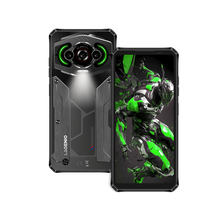
Instead of using its ultra-wide capability simply as another smartphone shooting mode, Eagle Pro integrates a dedicated 152.6° ultra-wide action camera into a compact 5G smartphone. The camera is designed around the requirements of action and outdoor shooting, combining its wide perspective with EIS, distortion correction, horizon correction, and 4K video recording.
The significance of the 152.6° specification is therefore not simply that it is a large number. It represents a camera designed to preserve a broad perspective while addressing the practical problems that come with an ultra-wide field of view.
More importantly, the action camera is connected to the rest of the smartphone rather than existing as a separate device. With 5G connectivity built in, Eagle Pro can take the footage captured by its ultra-wide action camera and use the phone's network connection for direct livestreaming.
That combination changes the traditional relationship between a smartphone and an action camera. Instead of carrying one device to capture the footage and another to handle connectivity, recording and communication can happen within the same compact device.
The Bigger Picture
Wide-angle photography has evolved from specialized optical lenses into a combination of optics, sensors, image processing, stabilization, and connectivity. The next time you switch to an ultra-wide camera, the number on the screen represents much more than simply "seeing more." It reflects a complex imaging system designed to control what happens when a lens tries to capture an unusually large slice of the world.