Can You Bring a Smartphone to Space Travel? What It Can Do

Welcome to the LAGENIO Smartphone Blog — where your mobile questions get clear answers.
As NASA advances the Artemis II mission, humanity’s return to the Moon is no longer a distant ambition—it’s becoming a reality. More importantly, this marks a broader shift: space exploration is moving beyond government-led programs into a new era of commercialization. From orbital tourism to potential lunar missions, space travel could gradually become accessible to ordinary people within the coming decades.
Against this backdrop, a once hypothetical question is starting to feel practical: if you could travel to space, could you bring your smartphone with you?
Can You Bring a Smartphone to Space?
The short answer is yes—but not in the way you use it on Earth. In future commercial spaceflight scenarios, such as spacecraft cabins or space stations, passengers will likely be allowed to carry personal electronic devices, including smartphones, much like on airplanes today. However, the key condition is that these devices must be used within controlled environments.
Inside a pressurized cabin with stable temperature and basic radiation shielding, smartphones can function normally. But once exposed to the vacuum of space or extreme temperature fluctuations, they would fail almost instantly. In other words, you can bring your phone to space, but you cannot use it freely outside protected environments.
What Can a Smartphone Do in Space?
Even with these limitations, smartphones remain surprisingly useful in space travel. First and foremost, they serve as powerful tools for capturing once-in-a-lifetime experiences. From photographing Earth through a spacecraft window to recording life in microgravity, smartphones can document moments that were once impossible for ordinary people to experience. As camera technology continues to evolve, future devices may even include features optimized for space conditions, such as complex lighting or low-gravity stabilization.
Beyond photography, smartphones continue to function as personal entertainment and information hubs. During long-duration flights, users can watch videos, listen to music, read content, or play games—just as they would on Earth. Meanwhile, advancements in satellite communication may eventually allow smartphones to maintain limited connectivity with Earth through specialized networks, enabling basic messaging or data exchange.
Looking further ahead, smartphones could also act as personal assistants in space, offering features such as health monitoring, task reminders, and environmental data display. In this sense, they may evolve into compact, AI-powered support systems for space travelers.
Why Space Is Extremely Harsh for Smartphones
The challenge lies in the fact that smartphones are designed for Earth—not for space. The environment beyond our planet introduces conditions far beyond what consumer electronics are built to handle.
Extreme temperature swings can push devices from intense heat to freezing cold within minutes, severely affecting battery performance and internal components. The vacuum of space eliminates air-based cooling, making it difficult for processors to dissipate heat. In addition, cosmic radiation can interfere with electronic circuits, causing data errors or long-term damage. Finally, the intense vibrations and acceleration during rocket launches can put enormous physical stress on delicate hardware.
Taken together, these factors make it clear that standard smartphones are not capable of operating independently in space.
What Protection Would a Smartphone Need?
If smartphones are to be used during space travel, proper protection becomes essential. This includes specialized protective casing designed to absorb shock, resist pressure, and provide insulation from extreme temperatures. Devices must also remain within controlled environments whenever possible, relying on cabin conditions to maintain safe operating ranges.
While full radiation shielding is difficult to achieve for consumer devices, exposure can be minimized by limiting usage outside protected areas. Ultimately, the key principle is simple: smartphones in space must operate within human-safe environments, not directly in space itself.
Why This Matters on Earth
At first glance, this topic may seem far removed from everyday life. However, space represents the most extreme version of environmental challenges that already exist on Earth. Conditions such as extreme cold, high heat, dust, humidity, and long periods without power are all situations where conventional smartphones can struggle.
This is exactly why durability and reliability are becoming increasingly important in modern devices. Rugged smartphones, in particular, are designed with these challenges in mind, offering enhanced protection and performance stability in demanding environments.
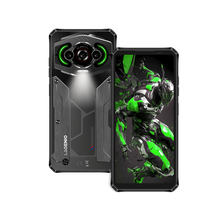
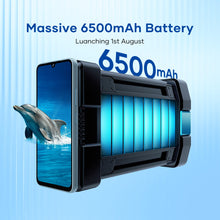
Take LAGENIO Rhino 1 Pro as an example. While it is not built for space, its design philosophy reflects a similar focus on resilience. With reinforced structural protection, it can better withstand impact, dust, and water exposure. Its large battery capacity and efficient power management support extended use in off-grid scenarios, while additional practical features make it more reliable in outdoor or demanding conditions. It may not survive space—but it is built to handle the toughest environments on Earth.
Final Thoughts
As missions like Artemis II continue to push the boundaries of exploration, space travel is gradually becoming more tangible. In the future, bringing a smartphone along for the journey will likely be possible, and within controlled environments, it will remain a valuable tool for capturing, connecting, and navigating the experience.
More importantly, the challenges of space are shaping how we think about technology on Earth. Most users don’t need a phone that can survive space—but they do need one that remains reliable when it matters most.