Using a Smartphone as a Mobile Backup Power Source: What Really Matters

Welcome to the LAGENIO Smartphone Blog — where your mobile questions get clear answers.
A smartphone can function as a mobile backup power source—but only under specific conditions.
Despite how often reverse charging is mentioned in product specifications, most smartphones are not genuinely suitable for emergency power use. The real distinction lies in two fundamental factors: battery capacity and practical power output.
Without both, reverse charging remains a theoretical feature rather than a reliable tool in real-world situations.
What “Backup Power” Means in Real Use
Backup power is not about convenience or charging speed. It is about keeping essential devices operational when no alternative power source is available.
In outdoor environments, work sites, extended travel, or power outages, priorities shift quickly. Communication, navigation, lighting, and basic connectivity become critical. Under these conditions, a phone is no longer just a personal device—it becomes part of a survival and reliability system.
For a smartphone to play this role effectively, it must be able to share power without sacrificing its own usability.
Battery Capacity Is the Foundation, Not a Bonus
Reverse charging alone does not make a smartphone suitable for emergency power scenarios.
Battery capacity sets a clear and unavoidable threshold.
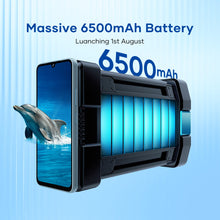
Most mainstream smartphones fall within the 4,000–5,000mAh range. While many of them technically support reverse charging, their limited energy reserves make power sharing impractical. Once they begin supplying power to another device, their remaining runtime drops sharply, often leaving the phone itself unusable.
Emergency power becomes realistic only when battery capacity moves beyond everyday standards.
In practical terms, batteries above 8,000mAh mark the point where a smartphone can share power while still retaining enough energy to function as a communication and navigation device. At this level, reverse charging shifts from a novelty feature to a usable emergency capability.
Reverse Charging Is a Mechanism, Not the Objective
Reverse charging is often misunderstood as the key feature. In reality, it is simply the mechanism that enables power output.
When reverse charging is activated, the phone’s charging port switches roles—from receiving power to supplying it. Technically, the phone becomes a standard USB power source. There is no proprietary protocol involved and no requirement for special hardware on the receiving device.
What matters is not the feature label, but whether the phone can deliver stable, controlled power without destabilizing its own operation.
Why USB Type-C Defines Practical Backup Power
Modern smartphones rely almost entirely on USB Type-C, and this directly determines how usable reverse charging is in emergency scenarios.
USB Type-C is a bi-directional interface by design. The same port used to charge the phone can also output power to other devices. This makes emergency power sharing flexible and widely compatible, rather than dependent on specialized accessories.
In real use, a smartphone can provide power through:
- Type-C to Type-C cables for modern devices
- Type-C to USB-A adapters for traditional USB-powered equipment
- Type-C to Micro-USB cables for older or specialized devices
The phone does not differentiate between device types—it simply outputs electrical power through a standardized interface.
What Devices Can a Smartphone Actually Power?
In emergency conditions, smartphones are best suited for low- and mid-power devices, where partial charging is often sufficient to restore essential functionality.
Typical examples include:
- Another smartphone needing power for calls or navigation
- Wireless earbuds and charging cases
- Smartwatches and fitness bands
- GPS units or handheld radios
- Headlamps, camping lights, and small LED accessories
These devices prioritize availability over speed. Even a limited recharge can be the difference between failure and continued operation.
Cables and Adapters Are Part of the System
One frequently overlooked aspect of reverse charging is that power availability often depends on cables, not features.
A phone may fully support reverse charging, but without the correct cable or adapter, that capability becomes inaccessible. In real emergency scenarios, standardized connectors and simple conversion options matter far more than advanced charging specifications.
Practical emergency power relies on compatibility and simplicity, not performance metrics.
Understanding the Limits of Smartphone Power Output
Smartphones are not designed to replace dedicated power banks. High-demand devices such as tablets, laptops, or large battery packs typically exceed what smartphone reverse charging is intended to support.
Attempting to power such devices is inefficient and rapidly drains the phone’s energy reserve. Emergency power from a smartphone is meant to bridge critical gaps, not sustain entire systems.
Rhino 1 Pro as a Real-World Emergency Power Example
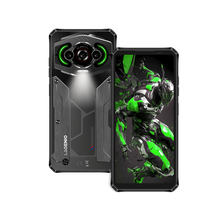
This is where devices like LAGENIO Rhino 1 Pro become relevant—not as marketing showcases, but as practical case studies.
With a 12,000mAh battery, Rhino 1 Pro sits well above the capacity threshold required for emergency power use. It can supply power to other devices through its USB Type-C port while still retaining sufficient energy to operate as a communication, navigation, and lighting device itself.
In this context, reverse charging is not treated as a headline feature. It functions as part of a broader, emergency-ready system built around endurance, reliability, and real-world usability.
Emergency Power Is a System, Not a Single Feature
A smartphone capable of emergency power use is defined by the integration of several elements:
- sufficient battery capacity
- stable power output
- a flexible interface such as USB Type-C
- realistic expectations about device compatibility
When these elements work together, the smartphone becomes more than a personal device. It becomes a dependable backup power source in situations where reliability matters more than convenience.